
In the world of metalworking and fabrication, precision and efficiency are paramount. One tool that stands out for its ability to achieve both is the plasma cutter. This powerful device has revolutionized the way metals are cut, allowing for intricate designs and quick production times. But what exactly is a plasma cutter, and how does it work? In this comprehensive blog, we’ll delve into the workings, applications, and advantages of plasma cutters.
What Is a Plasma Cutter?
A plasma cutter uses a jet of ionized gas, plasma, to cut through electrically conductive metal at high speed. It works on mild steel, stainless steel, aluminium, copper, and brass, cutting through material faster than most mechanical cutting methods. That combination of speed and versatility is why plasma cutting shows up across fabrication shops, structural steel yards, automotive repair bays, and heavy industrial plants alike.
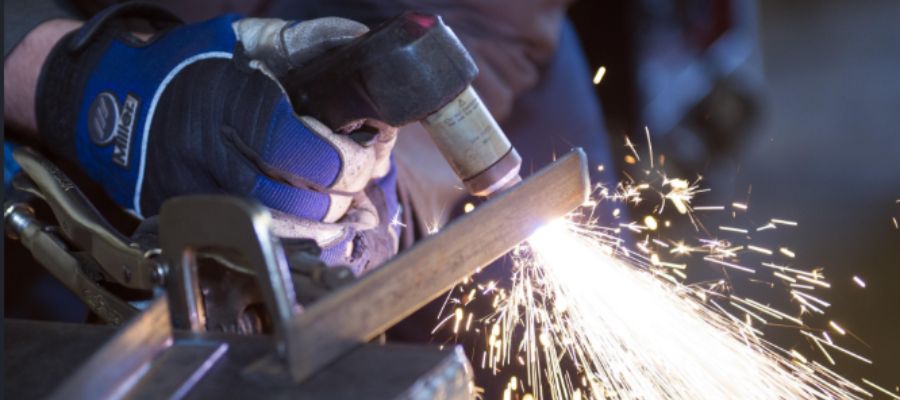
How Does a Plasma Cutter Work?
Cutting happens in a fast, six-step sequence inside the torch itself:
Step 1 – Gas Enters the Torch
Compressed gas, normally air, nitrogen or a specialised blend, flows into the torch around the electrode.
Step 2 – Electrical Arc Is Created
A high-voltage arc fires between the electrode and the workpiece and ignites in the gas stream.
Step 3 – Gas Becomes Plasma
The arc heats the gas to a very high temperature, and then this process eliminates electrons from the atoms, turning the gas into a plasma.
Step 4 – Plasma Jet Exits the Nozzle
The nozzle constricts the plasma into a narrow, high-velocity jet aimed at the cutting path.
Step 5 – Metal Is Melted and Removed
The plasma jet melts the metal on contact, and gas flow blows the molten material out of the cut.
Step 6 – The Torch Travels Along the Cutting Path
The torch moves along the cut line, hand-guided or CNC-driven, leaving a clean kerf behind.
Main Components of a Plasma Cutter
| Component | Function |
| Power Supply | Converts electrical power into the energy required for plasma generation |
| Plasma Torch | Directs the plasma stream toward the workpiece |
| Electrode | Helps establish and maintain the arc |
| Nozzle | Constricts and directs the plasma jet |
| Gas Supply | Provides plasma and/or shielding gas |
| Air/Gas Regulator | Controls gas pressure and flow |
| Ground/Work Clamp | Completes the electrical circuit |
| Consumables | Components such as electrodes and nozzles that require periodic replacement |
Consumable life depends on amperage, material, gas quality, cutting technique, and operating conditions, so replacement intervals vary quite a bit from shop to shop.
What Types of Plasma Cutters Are Available?
Plasma cutters generally split into two categories based on power input.
- Single Phase Plasma Cutters run off standard workshop power and suit lighter-duty, more portable cutting jobs.
- 3 Phase Plasma Cutters draw on an industrial power supply and handle heavier material and higher-volume cutting where sustained output matters more than portability.
What Materials Can a Plasma Cutter Cut?
| Material | Plasma Cutting Suitability |
| Mild Steel | Excellent |
| Carbon Steel | Excellent |
| Stainless Steel | Excellent |
| Aluminium | Good |
| Copper | Possible depending on equipment |
| Brass | Possible depending on equipment |
What Are Plasma Cutters Used For?
Plasma cutting delivers fast, precise thermal slicing across all electrically conductive metals, leaving clean edges that require minimal secondary grinding. Smaller workshops and mobile technicians rely on Single Phase Plasma Cutters for flexible, light-to-medium fabrication, while heavy industrial facilities utilize high-output 3 Phase Plasma Cutters for high-duty-cycle production and automated processing.
- Metal fabrication and sheet profiling
- Structural steel beam, channel, and plate processing
- Automotive body repair, chassis work, and custom modifications
- Industrial plant maintenance, decommissioning, and pipe cutting
- CNC automated cutting tables for high-precision batch parts
- Architectural metalwork and custom decorative fabrication
- Shipbuilding, marine repairs, and heavy industrial vessel manufacturing
Plasma cutting supports all of these because it cuts conductive metals quickly, with a clean enough edge that many jobs need little secondary finishing.
What Are the Advantages of Plasma Cutting?
- Fast Cutting gets material through production faster than most thermal methods.
- Suitable for Different Conductive Metals means one machine handles steel, stainless, and aluminium.
- Narrow Kerf keeps material waste down.
- CNC compatibility allows precise, repeatable automated cuts.
- No Mechanical Cutting Tool Required means no blade wear to manage.
- Suitable for complex profiles makes it a solid fit for detailed cut paths.
Plasma Cutting vs Other Metal Cutting Methods
| Cutting Method | Best Suited For | Key Consideration |
| Plasma Cutting | Conductive metals, sheet and plate | Fast thermal cutting |
| Laser Cutting | Precision sheet/plate work | High precision |
| Oxy-Fuel Cutting | Carbon steel and thicker sections | Not suitable for all metals |
| Waterjet Cutting | Many materials and cold cutting | No heat-affected zone |
| Mechanical Cutting | Various fabrication jobs | Depends on tool and material |
Conclusion
Plasma cutting is fast and versatile for different conductive metals and can be used in manual or CNC setups. It has a position throughout fabrication and industrial activities. It’s easier to choose the correct setup if you understand how the process works and where it sits compared to other types of cutting.